The Bluepharma | University of Coimbra Innovation Award is attributed every 2 years to an innovative research project in the health area. All research labs, institutes and organizations that host innovative research projects involving Portuguese researchers may apply.
These projects may be carried out by groups of more than one institution, but the research work must have been partially or totally conducted in Portuguese institutions, by Portuguese and/or foreign researchers.
The Bluepharma | University of Coimbra Innovation Award is attributed every 2 years to an innovative research project in the health area. All research labs, institutes and organizations that host innovative research projects involving Portuguese researchers may apply.
These projects may be carried out by groups of more than one institution, but the research work must have been partially or totally conducted in Portuguese institutions, by Portuguese and/or foreign researchers.
Tiago Baptista1,2, Inês Graça1,2,4, Elsa J. Sousa1,2, Ana I. Oliveira1,2, Natália R. Costa1,2, Pedro Costa-Pinheiro1,2, Francisco Amado5, Rui Henrique1,3,6 and Carmen Jerónimo1,2,6
1Cancer Epigenetics Group, Research Center, Portuguese Oncology Institute – Porto, Portugal
2Department of Genetics, Portuguese Oncology Institute – Porto, Portugal
3Department of Pathology, Portuguese Oncology Institute – Porto, Portugal
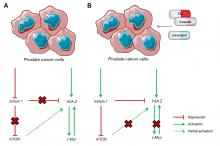
Dentro dos mecanismos clássicos de carácter epigénetico associado à carcinogénese, aqueles que dizem respeito às alterações de variantes de histonas são os menos compreendidos. Contudo, nos últimos anos, a variante H2A.Z e a sua forma acetilada têm surgido como um elemento importante no desenvolvimento e progressão neoplásica, nomeadamente em cancro da mama e da próstata, tendo sido sugeridas como alvos terapêuticos em carcinoma mamário.