ASPIC

send to a friend share this

1st Symposium on Iron Metabolism and Cancer

i3S – Instituto de Investigação e Inovação em Saúde, Porto, Portugal


24 October, 2023


See more informations here: https://www.i3s.up.pt/event.php?v=269

1st Symposium on Iron Metabolism and Cancer

i3S – Instituto de Investigação e Inovação em Saúde, Porto, Portugal


24 October, 2023


See more informations here: https://www.i3s.up.pt/event.php?v=269

III ASPIC-ASEICA International Meeting – Cancer Immunology, Tumor Microenvironment and Metastasis

III ASPIC-ASEICA International Meeting – Cancer Immunology, Tumor Microenvironment and Metastasis

EACR Conference: Cellular Bases for Patient Response to Cancer Therapies

Lyon, France


14 - 16 November, 2023


See more informations here: https://www.eacr.org/conference/cellularbases2023

EACR Conference: Cellular Bases for Patient Response to Cancer Therapies

Lyon, France


14 - 16 November, 2023


See more informations here: https://www.eacr.org/conference/cellularbases2023

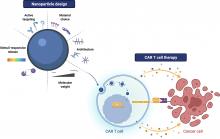
Polymer- and lipid-based gene delivery technology for CAR T cell therapy

Chimeric antigen receptor (CAR) T cell therapy represents a significant breakthrough in cancer treatment, offering a new approach to enhance the immune system's ability to fight cancer. The therapy involves engineering T cells with synthetic receptors called CARs to recognize and destroy cancer cells. Despite significant advancements in the field, most production of these T cells can be done through viral vectors, which comes with high costs, safety concerns, and production challenges.

Polymer- and lipid-based gene delivery technology for CAR T cell therapy

Chimeric antigen receptor (CAR) T cell therapy represents a significant breakthrough in cancer treatment, offering a new approach to enhance the immune system's ability to fight cancer. The therapy involves engineering T cells with synthetic receptors called CARs to recognize and destroy cancer cells. Despite significant advancements in the field, most production of these T cells can be done through viral vectors, which comes with high costs, safety concerns, and production challenges.

Digital expression profile of immune checkpoint genes in medulloblastomas identifies CD24 and CD276 as putative immunotherapy targets

Medulloblastoma is a common and aggressive type of brain tumor in children, consisting of four molecular subgroups. Traditional methods of treatment with surgery, radiotherapy and chemotherapy result in an incomplete response with serious side effects. Immunotherapy using the blockade of immune checkpoints such as PD-1, PD-L1 and CTLA4 has increased its prominence in solid tumor therapies. However, its application has been disappointing in brain tumors. Thus, alternative and poorly described immunological checkpoints could be revealed as interesting targets for medulloblastoma therapy.

Perfil de expressão digital de genes de checkpoints imunológicos em meduloblastomas identifica CD24 e CD276 como alvos putativos da imunoterapia

Meduloblastoma é um tipo comum e agressivo de tumor cerebral em crianças, constituído por quatro subgrupos moleculares. Os métodos tradicionais de tratamento como cirurgia, radioterapia e quimioterapia geralmente resultam numa resposta incompleta e com efeitos colaterais graves. A imunoterapia usando o bloqueio checkpoints imunológicos como PD-1, PD-L1 e CTLA4 tem aumentado o seu relevo nas abordagens terapêuticas de tumores sólidos. No entanto, a sua aplicação, tem sido decepcionante em tumores cerebrais.