Rui M. Silva-Santos1,2, Pedro Costa-Pinheiro1,2*, Ana Luís1,3*, Luís Antunes4, Francisco Lobo5, Jorge Oliveira5, Rui Henrique1,3,6, Carmen Jerónimo1,2,6* 1.Cancer Epigenetics Group, Research Center of the Portuguese Oncology Institute, Porto, Portugal; Departments of 2.Genetics, 3.Pathology, 4.Epidemiology and 5.Urology - Portuguese Oncology Institute, Porto, Portugal; 6.Department of Pathology and Molecular Immunology, Institute of Biomedical Sciences Abel Salazar (ICBAS), University of Porto, Portugal
Os tumores de células renais (TCR) são clinicamente, morfologicamente e geneticamente heterogéneos. A correcta identificação dos carcinomas de células renais (CCR), bem como a sua discriminação do tecido normal e dos tumores benignos é de extraordinária relevância clínica. Actualmente, sabe-se que os microRNAs podem apresentar diferentes níveis de expressão entre tecidos tumorais e normais, podendo auxiliar no diagnóstico de neoplasias, incluindo os TCRs.
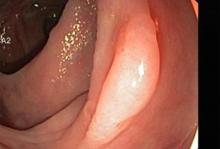
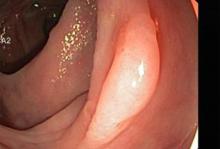
In September 2013, it was published in the edition of the Scandinavian Journal of Gastroenterology an original article on Hyperplasic Polyposis Syndrome resulting from clinical research of the Gatroenterology medical team of Braga Hospital. This paper seeks to contribute with new data to a progressive knowledge of this syndrome, probably not as rare as is thought today.
Foi publicado na edição de Setembro de 2013 da revista Scandinavian Journal of Gastroenterology um artigo original sobre a Síndrome de Polipose Hiperplásica resultante da investigação clínica do grupo de Gastroenterologia do Hospital de Braga. Este trabalho pretende contribuir com novos dados para um conhecimento progressivo desta Síndrome, provavelmente não tão rara como actualmente se julga.
Considerable attempts have been made to produce adequate matrices or scaffolds that mimic bone ECM for applications in tissue engineering and regenerative medicine. In this context, several factors must be considered, such as the modification of biomaterial surfaces using growth factors, living bone cells or proteins, to guide cellular responses in bone remodeling, like osteoblast adhesion and long term functionality expressed as proliferation, synthesis of alkaline phosphatase and deposition of calcium containing mineral.
Considerable attempts have been made to produce adequate matrices or scaffolds that mimic bone ECM for applications in tissue engineering and regenerative medicine. In this context, several factors must be considered, such as the modification of biomaterial surfaces using growth factors, living bone cells or proteins, to guide cellular responses in bone remodeling, like osteoblast adhesion and long term functionality expressed as proliferation, synthesis of alkaline phosphatase and deposition of calcium containing mineral.