ASPIC

envie a um amigo share this

HOTAIR is transcriptionally activated by HOXA9 and is a prognostic marker in malignant glioma

O HOTAIR é transcricionalmente ativado pelo HOXA9 e é um biomarcador de prognóstico em gliomas

Neste trabalho, publicado na revista Oncotarget por um grupo de investigadores do ICVS, na Escola de Medicina da Universidade do Minho, em colaboração com a Universidade e o Hospital de Clermont-Ferrand (França), foi estudado o RNA longo não-codificante HOTAIR em gliomas, os tumores cerebrais primários mais comuns. Em particular, foram avaliados os níveis de expressão e metilação do HOTAIR, a alteração do seu número de cópias genéticas, bem como o seu valor prognóstico em pacientes portugueses e franceses com glioma, assim como em bases de dados disponíveis online.

LEPABE (UPorto) researchers developed a nanosystem for Glioblastoma multiform therapy

Researchers from LEPABE have successfully developed a nanovehicle for the treatment of Glioblastoma Multiforme. This study was published in the "International Journal of Pharmaceutics”.  The development of this nanosystem intended to increase the therapeutic efficacy of temozolomide. Glioblastoma multiform is the most common and invasive type of malignant brain tumour. This neoplasia presents high morbidity and mortality with an average survival rate of up to one year.

Investigadores do LEPABE (UPorto) desenvolvem nanossistema para terapia do Glioblastoma multiforme

Investigadores do LEPABE na Universidade do Porto desenvolveram com sucesso um nanoveículo para o tratamento do Glioblastoma Multiforme. O estudo foi publicado na revista "International Journal of Pharmaceutics”. O desenvolvimento deste nanossistema pretende aumentar a eficácia terapêutica da temozolomida. O glioblastoma multiforme é, de entre os tumores cerebrais malignos, o mais comum e invasivo. Esta neoplasia apresenta alta mortalidade, sendo que os pacientes sobrevivem em média até um ano depois do diagnóstico.

HOTAIR Polymorphisms have implications in the prognosis of prostate cancer

Authors and Affiliations:

Ana Isabel Oliveira1,2*, Ana Xavier-Magalhães1,2*, Catarina Moreira-Barbosa3, Hugo Magalhães1,2, Rui Henrique3,4,5, Carmen Jerónimo4,5, Bruno M. Costa1,2.


1Life and Health Sciences Research Institute (ICVS), School of Health Sciences, Campus de Gualtar, University of Minho, 4710-057 Braga, Portugal;

Polimorfismos do HOTAIR têm implicações no prognóstico de cancro da próstata

O objectivo deste trabalho foi avaliar o impacto dos polimorfismos de nucleótido simples (SNP – do inglês single nucleotide polymorphisms) rs920778 e rs12826786 do RNA longo não-codificante HOTAIR na susceptibilidade e prognóstico de pacientes com cancro da próstata (CaP). Neste estudo de caso-controlo, os nossos resultados mostram que não há uma associação entre as variantes polimórficas rs920778 e rs12826786 no gene HOTAIR e a susceptibilidade para o desenvolvimento de CaP.

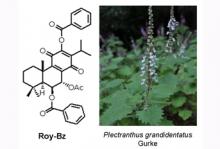
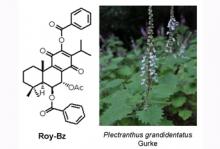
First small-molecule PKCdelta-selective activator with anticancer activity

This work reports the identification of the first small-molecule selective activator of PKCdelta with promising application in colon cancer therapy.

First small-molecule PKCdelta-selective activator with anticancer activity

This work reports the identification of the first small-molecule selective activator of PKCdelta with promising application in colon cancer therapy.

Novel dual inhibitor of the p53-MDM2/X interactions with anticancer properties

Considering the crucial role of p53 in cancer development and dissemination, p53-targeted therapies are amongst the most encouraging anticancer strategies. Inactivation of p53 by interaction with murine double minute (MDM)2 and MDMX is a common event in human cancers bearing wild-type (wt) p53. Consistently, simultaneous inhibition of the p53 interaction with both MDMs is crucial for full p53 reactivation in cancer.

Novel dual inhibitor of the p53-MDM2/X interactions with anticancer properties

Considering the crucial role of p53 in cancer development and dissemination, p53-targeted therapies are amongst the most encouraging anticancer strategies. Inactivation of p53 by interaction with murine double minute (MDM)2 and MDMX is a common event in human cancers bearing wild-type (wt) p53. Consistently, simultaneous inhibition of the p53 interaction with both MDMs is crucial for full p53 reactivation in cancer.