
Associação Portuguesa de Investigação em Cancro
Organoides derivados de doentes para estudar a dinâmica da glicosilação na doença gástrica
Organoides derivados de doentes para estudar a dinâmica da glicosilação na doença gástrica
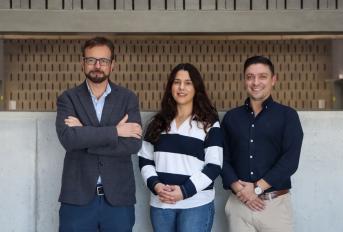
Investigadores do grupo de investigação Glycobiology in Cancer do i3S desenvolveram um biobanco de organoides gástricos derivados de pacientes, revelando que estes modelos reproduzem fielmente a glicosilação dos tecidos humanos ao longo da carcinogénese. O estudo demonstra ainda que os organoides captam a heterogeneidade tumoral e regulam dinamicamente antigénios Lewis, influenciando a interação com Helicobacter pylori.
Autores e Afiliações:
Liliana Santos-Ferreira1,2,3, Álvaro M. Martins1,2,3, Henrique O. Duarte1,2, Eva Moia1,2, Ana F. Costa1,2,3, Arnoud H. de Ru4, Isabel Faria-Ramos1,2, Rita Matos1,2, Rita Barros1,2,5,6, Bruno Cavadas1, Marta Silva1, Sofia Pedrosa6, Diana A. Batista6, Joana Gomes1,2 ∙ Thomas Borén7, Fabiana Sousa8,9, Frederica Casanova-Gonçalves8,9, José Barbosa8,9, Ana Magalhães1,2,3, Catarina Gomes1,2, Hugo Santos-Sousa1,5,8,10, Sina Bartfeld11,12, Manfred Wuhrer4, Noortje de Haan4, Fátima Carneiro1,2,13,14, Celso A. Reis1,2,3,5, Filipe Pinto1,2,15,16
- i3S – Instituto de Investigação e Inovação em Saúde, Universidade do Porto, Portugal
- IPATIMUP – Institute of Molecular Pathology and Immunology, University of Porto, Portugal
- Instituto de Ciências Biomédicas Abel Salazar (ICBAS), Universidade do Porto, Portugal
- Center for Proteomics and Metabolomics, Leiden University Medical Center, Netherlands
- Faculty of Medicine, University of Porto (FMUP), Portugal
- Serviço de Anatomia Patológica, Unidade Local de Saúde (ULS) de São João, Portugal
- Department of Medical Biochemistry and Biophysics, Umeå University, Sweden
- Serviço de Cirurgia, ULS de São João, Portugal
- RISE-Health, Department of Surgery and Physiology, FMUP, Portugal
- Obesity Integrated Responsibility Unit (CRI-O), São João University Medical Center, Portugal
- Simulierte Mensch, Technische Universität Berlin & Charité – Universitätsmedizin Berlin, Germany
- Institute of Biotechnology, Technische Universität Berlin, Germany
- Department of Pathology, FMUP, Portugal
- Department of Pathology, ULS de São João, Portugal
- Present address: i3S, Universidade do Porto, Portugal
- Lead Contact: Filipe Pinto ([email protected])
Abstract:
Aberrant cellular glycosylation is a key event that accompanies and actively sustains gastric neoplastic transformation. Patient-derived organoids (PDOs) have recently emerged as promising ex vivo models to study human gastric diseases; however, their glycosylation landscape remains unknown. To evaluate gastric PDOs as avatars of in vivo tissue glycosylation, a biobank of gastric PDOs (n = 56) was generated from gastric mucosa samples of non-tumoral obese patients (n = 11), adjacent tumor mucosa (n = 26), and gastric tumor tissue (n = 19). PDOs reproduce distinct stages of gastric carcinogenesis and recapitulate the gastric tissue-associated glycosylation profiles. PDOs capture glycan inter- and intra-tumoral heterogeneity, which is maintained over time and upon biobanking and xenografting. Furthermore, expression of type I/II Lewis antigens is dynamically controlled by the PDO’s differentiation status, influencing Helicobacter pylori binding, mirroring the gastric epithelium-tissue interactions. This study establishes PDOs as robust ex vivo tools to study gastric glycan dynamics in both gastric physiological and pathological settings.
Revista: Cell Reports (2025)
Link: https://doi.org/10.1016/j.celrep.2025.116550


