ASPIC

envie a um amigo share this

O peso molecular do ácido hialurónico influência a sua interação com células do cancro gástrico via interação com o recetor CD44

O ácido hialurónico é um biopolímero que se acumula no ambiente tumoral, em especial à volta das células cancerígenas. Esta acumulação ocorre devido a alterações na síntese e degradação do HA, resultando na formação de cadeias poliméricas de diferentes tamanhos. Neste estudo, mimetizámos este peculiar microambiente tumoral (i.e. ácido hialurónico de diferentes tamanhos) e avaliámos a resposta de células de cancro gástrico.

2nd ESID Focused Meeting: PID and Malignancy

Brussels, Belgium


18 - 21 September, 2019


See more informations here: https://esidmeeting.org/

2nd ESID Focused Meeting: PID and Malignancy

Brussels, Belgium


18 - 21 September, 2019


See more informations here: https://esidmeeting.org/

Euphol, a tetracyclic triterpene from Euphorbia tirucalli, induces autophagy and sensitizes temozolomide cytotoxicity on glioblastoma cells

The research that was developed at Barretos Cancer Hospital (Brazil) in collaboration with the ICVS of the University of Minho, was a partnership with the company Amazônia Fitomedicamentos Ltda and revealed mechanisms of action involved in the cytotoxicity promoted by the euphol molecule, obtained from the Brazilian biodiversity in glioblastoma cells. One of these mechanisms was the induction of autophagic process, which also contributed, in parts, to potentiate the effect of the chemotherapy used in clinical practice, temozolomide.

Eufol, um triterpeno tetracíclico obtido da Euphorbia tirucalli, induz autofagia e sensibiliza células de glioblastoma à citotoxicidade da temozolomida

A pesquisa que foi desenvolvida no Hospital de Câncer de Barretos (Brasil) em colaboração com o ICVS da Universidade do Minho, foi uma parceria com a empresa Amazônia Fitomedicamentos Ltda e revelou mecanismos de ação envolvidos na citotoxicidade promovida pela molécula eufol, obtida a partir da biodiversidade brasileira, em células de glioblastoma. Um destes mecanismos foi a indução de processo autofágico, que também contribuiu, em parte, para potencializar o efeito do quimioterápico utilizado na prática clínica, a temozolomida.

Nanotechnology in Cancer: Engineering for Oncology

Churchill College, University of Cambridge, UK


12 - 14 September, 2019


See more informations here: https://www.eacr.org/conference/nanotechnology19

Nanotechnology in Cancer: Engineering for Oncology

Churchill College, University of Cambridge, UK


12 - 14 September, 2019


See more informations here: https://www.eacr.org/conference/nanotechnology19

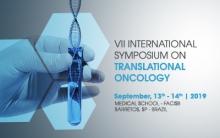
VII International Symposium on Translational Oncology

Medical School - Facisb | Barretos, SP - Brazil


13- 14 September, 2019


See more informations here: http://oncoeventos.com.br/evento/74-vii-international-symposium-on-translational-oncology

VII International Symposium on Translational Oncology

Medical School - Facisb | Barretos, SP - Brazil


13- 14 September, 2019


See more informations here: http://oncoeventos.com.br/evento/74-vii-international-symposium-on-translational-oncology

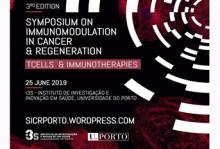
3rd Symposium on Immunomodulation in Cancer and Regeneration: T-Cells and Immunotherapies

i3S – Instituto de Investigação e Inovação em Saúde, Universidade do Porto, Porto, Portugal


25 June, 2019


See more informations here: https://sicrporto.wordpress.com/