ASPIC

send to a friend share this

European Cancer Summit 2024 - United Against Cancer: Forging New Frontiers

Brussels & online


20-21 November, 2024


See more informations here: https://www.europeancancer.org/summit.html

A new study reveals that HMGA1 promotes cancer stem-like traits and increases sensitivity to monensin in gastric cancer cells

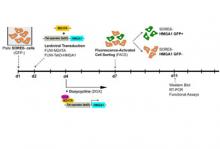
Researchers from the "Differentiation and Cancer" group at i3S, in collaboration with António Pombinho, from the "BioSciences Screening" platform, and Filipe Pereira, from Lund University, elucidated the role of the transcription factor HMGA1 in gastric cancer stem cells. The study, entitled "HMGA1 stimulates cancer stem-like features and sensitivity to monensin in gastric cancer," was recently published in the journal "Experimental Cell Research."

Um novo estudo revela que o HMGA1 estimula as características estaminais e aumenta a sensibilidade à monensina em células de cancro gástrico

Investigadores do grupo “Diferenciação e Cancro” do i3S, em colaboração com António Pombinho, da plataforma “BioSciences Screening”, e Filipe Pereira, da Universidade de Lund, elucidaram o papel do fator de transcrição HMGA1 nas células estaminais de cancro gástrico. O estudo, intitulado “HMGA1 stimulates cancer stem-like features and sensitivity to monensin in gastric cancer”, foi recentemente publicado na revista “Experimental Cell Research”.

Goodbye Flat Biology: ex vivo to in vivo models of cancer

Researchers from Porto find a new biomarker for the early detection of colorectal cancer

A recent study, led by Ricardo Marcos-Pinto and Ângela Fernandes, with Henrique Fernandes-Mendes as its first author, revealed associations between aberrant glycoprofiles and clinical variables. This study, conducted in the Immunology, Cancer & Glycomedicine group at i3S (led by Salomé Pinho), reveals an association between the levels of branched N-glycans in epithelial cells and factors such as age, smoking and polyp dimension, suggesting a link between these glycans and colorectal cancer progression.

Investigadores do Porto descobrem novo biomarcador para deteção precoce do cancro colorretal

Um estudo recente, liderado pelos investigadores Ricardo Marcos-Pinto e Ângela Fernandes, com a primeira autoria de Henrique Fernandes-Mendes, revelou associações entre perfis de glicosilação aberrantes e diversas variáveis clínicas.

Minor canabinoides atuam em alvos moleculares importantes para o cancro da mama

O cancro da mama recetor de estrogénio positivo (ER+) é o subtipo mais diagnosticado em todo o mundo. O desenvolvimento de resistência endócrina associada ao tratamento destes tumores tem levado à implementação de novas estratégias como a combinação das terapias clássicas com novos agentes terapêuticos.

Molecular Targets of Minor Cannabinoids in Breast Cancer: In Silico and In Vitro Studies

Authors and Affiliations:

Cristina Ferreira Almeida1,2, Andreia Palmeira3,4, Maria João Valente5, Georgina Correia-da-Silva1,2, Anne Marie Vinggaard5, Maria Emília Sousa3,4, Natércia Teixeira1,2, Cristina Amaral1,2

1 UCIBIO, Laboratory of Biochemistry, Department of Biological Sciences, Faculty of Pharmacy, University of Porto, Rua Jorge Viterbo Ferreira, n° 228, 4050-313 Porto, Portugal

Anticancer potential of combined antidiabetic drugs in pancreatic cancer treatment

Despite significant advances in the understanding, prevention, diagnosis and treatment of pancreatic cancer, it continues to affect millions of people around the world. People with diabetes have an increased lifetime risk of developing pancreatic cancer. Sodium-glucose co-transporter 2 (SGLT2) inhibitors and metformin are drugs widely used to treat type 2 diabetes, and both have been associated with a reduction in the risk of pancreatic cancer.

Potencial anticancerígeno da combinação de fármacos antidiabéticos no tratamento do cancro do pâncreas

Apesar dos avanços significativos na compreensão, prevenção, diagnóstico e tratamento do cancro do pâncreas, este continua a afetar milhões de pessoas em todo o mundo. As pessoas com diabetes têm um risco acrescido de desenvolver cancro do pâncreas ao longo da vida. Os inibidores do co-transportador sódio-glicose 2 (SGLT2) e a metformina são fármacos amplamente utilizados no tratamento da diabetes tipo 2, e ambos têm sido associados a um menor risco de cancro do pâncreas.