ASPIC

send to a friend share this

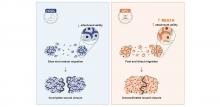
E-cadherin variants associated with oral facial clefts trigger aberrant cell motility in a REG1A dependent manner

The i3S Epithelial Interactions in Cancer group coordinated a multidisciplinary team to address how germline alterations of E-cadherin trigger different clinical manifestations. The group was intrigued by the fact that loss of E-cadherin function may cause hereditary diffuse gastric cancer (HDGC) and congenital malformations, such as orofacial clefts (OFC).

Fendas orofaciais e risco de cancro gástrico: uma questão de migração mediada por caderina-E

O grupo Epithelial Interactions in Cancer do i3S coordenou uma equipa multidisciplinar para estudar a forma como as alterações germinativas da caderina-E desencadeiam diferentes manifestações clínicas. O grupo ficou intrigado com o facto da perda de função da caderina-E poder causar cancro gástrico difuso hereditário (HDGC) e malformações congénitas, como as fendas orofaciais (OFC).

2nd Immuno-Oncology SPO/SPI School & Joint Meeting

18th October exclusively online, 19th October Conímbriga Hotel do Paço, Conímbriga, Portugal


18 - 19 October, 2024


See more informations here: https://www.spimunologia.org/news/2nd-immuno-oncology-spo-spi-school-joint-meeting/


2nd Immuno-Oncology SPO/SPI School & Joint Meeting

18th October exclusively online, 19th October Conímbriga Hotel do Paço, Conímbriga, Portugal


18 - 19 October, 2024


See more informations here: https://www.spimunologia.org/news/2nd-immuno-oncology-spo-spi-school-joint-meeting/


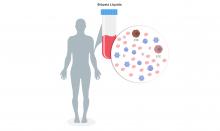
New study increases the precision of the detection of circulating tumor cells

Circulating tumour cells, commonly known as CTCs, are live tumour cells released by the active tumour into blood circulation, which allows them to travel through the body and potentially form new tumour in other organs, or metastases. The enumeration of CTCs holds prognostic information but, most importantly, CTCs can serve to evaluate the presence of druggable targets, enabling the oncologist to continuously monitor the patients non-invasively and adjust their treatment in a personalised manner. The study of CTCs is also crucial to better understand their role in the metastatic cascade.

Novo estudo aumenta a precisão da deteção de células tumorais circulantes

As células tumorais circulantes, frequentemente conhecidas como CTCs, são células viáveis libertadas pelo tumor primário para a corrente sanguínea, o que lhes permite deslocarem-se para qualquer parte do organismo e potencialmente formar metástases, levando ao desenvolvimento de tumores secundários. Para compreender melhor o papel das CTCs na cascata metastática, é crucial capturar, identificar e caracterizar estas células. No entanto, esta população heterogénea de células é também rara, o que dificulta o seu isolamento e identificação.

5th International Conference on Lymphocyte Engineering (ICLE 2025)

Munich, Germany


20-22 February, 2025


See more informations here: https://lymphocyte.kenes.com/

5th International Conference on Lymphocyte Engineering (ICLE 2025)

Munich, Germany


20-22 February, 2025


See more informations here: https://lymphocyte.kenes.com/

Dissecting the genetic drivers of thyroid cancer metastization

Valdemar Máximo, Arnaud Da Cruz Paula and Paula Soares from the Cancer Signaling & Metabolism group at i3S have always wanted to know more about the genomic profiling of primary and metastatic thyroid cancers. Hence, they decided to meticulously characterize the genomic features of these neoplasms.


Dissecando o perfil genético da metastização do cancro da tiróide

O Valdemar Máximo, Arnaud Da Cruz Paula e a Paula Soares do grupo Cancer Signalling & Metabolism do i3S sempre quiseram saber mais sobre o perfil genómico dos tumores primários e metastáticos da tiróide. Deste modo, decidiram caracterizar meticulosamente as particularidades genómicas destas neoplasias.